
RESEARCH

Research at the station includes the Ecology of Vertebrates, Climate Change, Resource Use, Community Conservation, and Indigenous Studies.

We have been running research expeditions annually for 35 years, since our first student expedition in 1991.

We have long-term, multi-decade data sets on all the vertebrate assemblages, climate change, and resource use. 

Fundamazonia research

The overreaching goal of Fundamazonia’s research is to advance wildlife conservation in western Amazonia by studying the interrelation of the ecology of species, sustainable use, climate change and wildlife trade. The project uses field research that provides the science base for wildlife conservation, including community-based conservation in protected areas, community reserves, and Indigenous territories. 

The monitoring conducted by Fundamazonia is unique because the research includes all the vertebrate groups, with data collected consistently in all seasons. The populations of some 220 arboreal, terrestrial, and aquatic vertebrate species are monitored monthly including fish, frogs, toads, caimans, lizards, forest birds, parrots, macaws, shorebirds, and aquatic, terrestrial, and arboreal mammals. 

We also monitor forest habitats and sustainable resource use, management by local people, and socioeconomics. 

Sample sizes are large. For example, sample sizes in a recent publication on dolphin and fish included a total of 1,341 dolphin surveys covering 6,705 km of transect and over 50,000 sightings of individuals from 2010 to 2024, and 1,290 fish surveys conducted over the same period at the same locations identified and measured over 40,000 fish.

Climate Change Research

The climate change research shows how recent historic droughts and floods are affecting the aquatic and terrestrial ecosystems. The climate intensifications have resulted in large mortality of species, and in Loreto millions of aquatic vertebrates died during recent droughts, and millions of terrestrial vertebrates died during the floods of last decade. 

The peak of the intensifications is when species become particularly vulnerable, and these tipping points are changing the diversity in the Amazon. Our research shows how climate change is currently the greatest threat to Amazon biodiversity, because the 22-year data set on aquatic and terrestrial vertebrates covers the historic floods, historic droughts, and transition years.

The western Amazon forests can be broadly split into non-flooded forests (tierra firme) and flooded forests (várzea and igapó) that fluctuate annually between flooded and dry seasons. The ecology of wildlife in flooded forests revolves around the aquatic and terrestrial cycles and populations are sensitive to intensification during high floods and droughts. 

Recent models predict an intensification of the hydrological cycles in the western Amazon basin with increased intensity and duration of flooding during wet seasons and lower water levels and less precipitation during the dry season. 

Community-based Conservation, Sustainable Use and Wildlife Management Research

Indigenous people of Amazonia have been using wildlife since pre-Colombian times and animals continue to be used throughout the Amazon basin. Over the past three decades research of Fundamazonia has focused on understanding how species respond to hunting and fishing and developing community-based management and conservation strategies for sustainable use and species recovery. 

Fundamazonia’s research in the Amazon overwhelming found that community-based approaches to wildlife management and conservation were resulting in greater success than strict protection or other forms of management. Over three decades community-based wildlife management systems have been developed through research and community participation resulting in sustainable community-based conservation.

Community-based strategies were shown to be successful in the socio-economic and cultural landscape of the Amazon. This led to an expansion in the number of community managed areas in the form of Indigenous territories, community run protected areas and community co-managed protected areas. Currently around 60% of Loreto is a community/co-managed/Indigenous area where people are conserving the Amazon forests (Map).
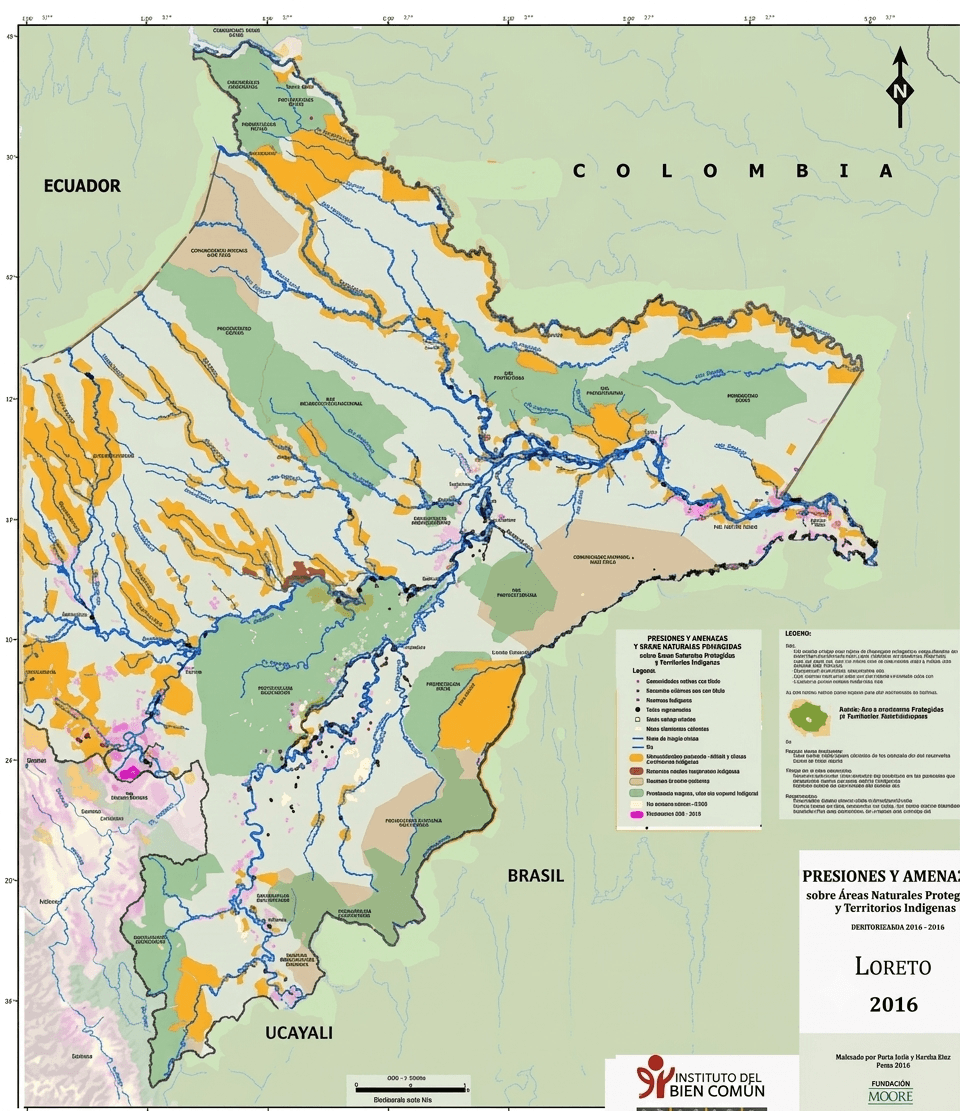
Map of Loreto showing community Regional Conservation Areas, Co-managed National Reserves (green), and Indigenous Territories (orange).

Wildlife Trade and Wild Meat Market Research

Some of the research on sustainable use programs involve regulated international wildlife trade, such as the peccary leather trade and river turtle trade involving CITES, custody chains, certification and verification.  

Research is also done on local trade in wildmeat, fish and palms which are important resources, and many indigenous people depend on local trade for their household economy. Studies are being done on sustainability of resource use through Indigenous management, which has shown to be sustainable in community reserves, co-managed reserves, and indigenous territories.

Iquitos has one of the largest and most active wet wild meat markets in the western Amazon and long-term research is being done on the wild meat trade. This research is particularly important after the pandemic, because of the links between wild meat markets and disease transmission.

Research on Animal Taxa

  • Ungulates & Rodents

Research projects include ecology, population dynamics, reproduction, hunting, sustainable use and management, primarily using camera trap methods.

  • Carnivores

Research projects include ecology, population dynamics, illegal trade, primarily using camera trap methods.

  • Primates

Research projects include ecology, population dynamics, behaviour, hunting impacts, and conservation.

  • Dolphins & Otters

Research projects include ecology, population dynamics, behaviour, communication and conservation.

  • Fishing Bats

Research projects include population dynamics and habitat use.

  • Macaws, Parrots & Parakeets

Research projects include ecology, population dynamics, and conservation.

  • Aquatic and Shorebirds

Research projects include ecology, population dynamics, and conservation.

  • Fish and Fisheries

Research projects include diversity, ecology, population dynamics, sustainable use and traditional fisheries management.

  • Caimans

Research projects include ecology, population dynamics, and conservation.

  • Frogs and lizards

Research projects include diversity, ecology, and population dynamics.
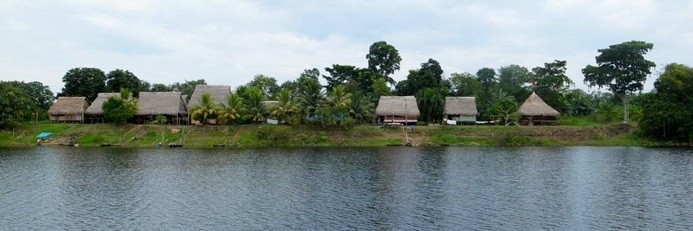
FundAmazonia Research Publications

Amazon Climate Change Research

  1. Adrià San-­Joséa, Pedro Mayor, Bruno Carvalhoa , Hani R. El Bizric, André Pinassi Antunes, Miguel Antunez­Correa, Rolando Aquino, Richard E. Bodmer et al. (2023). Climate determines transmission hotspots of Polycystic Echinococcosis, a life-threatening zoonotic disease, across Pan-Amazonia. PNAS Vol. 120 33  e2302661120 https://doi.org/10.1073/pnas.2302661120
  2. Bodmer, R., P. Mayor, M. Antunez, T. Fang, K. Chota, T. Ahuanari Yuyarima, S. Flores, B. Cosgrove, N. López, O. Pizuri & P. Puertas (2020). Wild Meat Species, Climate Change, and Indigenous Amazonians. Journal of Ethnobiology, 40: 220-235.
  3. Bodmer, R, Puertas, P, Henderson, P, Mayor, P, Antúnez, M, Fang, T, Chota, K, Arenas, M, Glotin, H, Trone, M, Cosgrove, B, Docherty, E and M. Walkey (2018). Modelamiento de los Consecuencias Previsibles del Dragado de los Principales Ríos Amazónicos Sobre la Fauna Silvestre y la Gente de los Bosques Inundados de Loreto, Perú. Folia Amazonica. Vol. 27 (2): 247-258. DOI: https://doi.org/10.24841/fa.v27i2.471
  4. Bodmer, R., P. Mayor, M. Antunez, K. Chota, T. Fang, P. Puertas, M. Pittet, M. Kirkland, M. Walkey, C. Rios, P. Perez-Peña, P. Henderson, W. Bodmer, A. Bicerra, J. Zegarra and E. Docherty (2018). Major shifts in Amazon wildlife populations from recent intensification of floods and drought. Conservation Biology. 32(2):333-344.
  5. Bodmer, R., T. Fang, M. Antunez, P. Puertas, K. Chota, M. Pittet, M. Kirkland, M. Walkey, C. Rios, P. Perez-Peña, P. Mayor, J. Zegarra and E. Docherty (2017). Impact of Recent Climate Fluctuations on Biodiversity and People in Flooded Forests of the Peruvian Amazon. CBD Technical Series No. 89, pp.81-90.
  6. Bodmer, R. (2014). Cambio Climático y Fauna Silvestre en la Amazonía peruana. IN: Amazonía y Cambio Climático: Perspectivas, Oportunidades y Amenazas. IIAP eds. Organización del Tratado de Cooperación Amazónica, OTCA, Lima, Peru.
  7. Desbiez, A. L. J., Bodmer, R. E. and Tomas, W. M. (2010). Mammalian densities in a Neotropical wetland subject to extreme climatic events. Biotropica 42: 372–378.

Community-based Conservation, Sustainable Use and Wildlife Management Research

  1. Mahabale, D.; Bodmer, R.; Pizuri, O.; Uraco, P.; Chota, K.; Antunez,M.;Groombridge, J. (2025). Sustainability of Hunting in Community-Based Wildlife Management in the Peruvian Amazon. Sustainability, 17, 914. https:// doi.org/10.3390/su17030914
  2. Mayor, P.; Bodmer, R.; Moya, K.; Solis, S.; Kirkland, M.; Perez-Peña, P.; Fang, T.; Orta-Martínez, M. (2024) Trends in Urban Wild Meat Trade of Chelonians (Turtles and Tortoises) in the Peruvian Amazon. Animal, 14, 3205. https://doi.org/10.3390/ ani1422320
  3. Naranjo, E. J. and R. Bodmer (2024). The Effects of Hunting on Tapir Populations. IN: M. Melletti, R. Reyna-Hurtado and Medici (Editors) Tapirs of the World Ecology, Conservation and Management. Springer, Brazil, pp. 141-148.
  4. Bodmer, R., Pablo Puertas, Tula Fang, Miguel Antúnez, Sandro Soplín, Jonathan Caro, Pedro Pérez, Hani El Bizri, Marco Arenas, José Carlos Nieto, Maire Kirkland and Pedro Mayor (2023). Management of Subsistence Hunting of Mammals in Amazonia: A Case Study in Loreto, Peru. In: Spironello, W.R., Barnett, A.A., Lynch, J.W., Bobrowiec, P.E.D., Boyle, S.A. (eds) Amazonian Mammals. Springer, Cham. https://doi.org/10.1007/978-3-031-43071-8_10
  5. Kirkland, M., C. Eisenberg, A. Bicerra, R. Bodmer and P. Mayor 2018. Sustainable wildlife extraction and the impacts of socio-economic change among the Kukama-Kukamilla people of the Pacaya-Samiria National Reserve, Peru. DOI. 10.1017/S0030605317001922.
  6. Mayor, P., H. El Bizri, R. Bodmer and M. Bowler (2017). Improved sustainability assessment of mammal reproduction through sampling of hunted species in the wild. Conservation Biology 31: 912-923.
  7. Mayor, P., Perez, P., Bowler, M., Kirkland, M. and R.E. Bodmer. (2015). Effects of selective logging on large mammal populations in a remote indigenous territory in the northern Peruvian Amazon. Ecology and Society.
  8. Desbiez, A.L.J. Keuroghlian, A. Piovezan, U. and Bodmer R.E. (2011). Invasive species and bushmeat hunting contributing to wildlife conservation: the case of feral pigs in a Neotropical wetland. Oryx 45: 78-83.
  9. Mayor, P. and Bodmer, R. (2009) Pueblos indígenas de la Amazonía peruana. Ed. CETA, Iquitos, Peru, pp. 312, ISBN: 978-612-00-0069-4
  10. Desbiez, A. L. J., Bodmer, R. E. and Santos, S. A. (2009). Wildlife habitat selection and sustainable resources management in a Neotropical wetland. International Journal of Biodiversity and Conservation 1(1): 11-20.
  11. Bodmer, R., Puertas, P. and Fang, T.G. 2008. Co-managing Wildlife in the Amazon and the Salvation of the Pacaya-Samiria National Reserve in Peru. In: Wildlife and Society. The Science of Human Dimensions. In: Michael Manfredo, Jerry Vaske, Perry Brown, Daniel Decker and Esther Duke (eds). Island press. Washington DC, pp 104-116.
  12. Bodmer, R. and P. Puertas. 2007. Impacts of Displacement in the Pacaya-Samiria National Reserve, Peru. In: Kent H. Redford and Eva Fearn (eds). Protected areas and human displacement: a conservation perspective. WCS Working Papers: Nº 29. WCS, pp. 29-33
  13. Halme, K.J., and R.E. Bodmer. 2007. Correspondence between scientific and traditional ecological knowledge: rain forest classification by the non-indigenous ribereños in Peruvian Amazonia. Biodiversity and Conservation, 16, 1785-1801.
  14. Bodmer, R. 2006. Hunting for conservation in the Amazon. In: S Guynup (ed), State of the Wild: A Global Portrait of Wildlife, Wildlands, and Oceans, Island Press, Washington DC, pp. 139-145.
  15. Bodmer, R. and Robinson, J.G. 2004. Evaluating the sustainability of hunting in the Neotropics. In: Silvius, K., Bodmer, R. and Fragoso, J. (eds.) People in Nature: Wildlife Conservation in South and Central America, Columbia University Press, New York, 299-323.
  16. Puertas, P.E. and Bodmer, R.E. 2004. Hunting effort as a tool for community-based wildlife management in Amazonia. In: Silvius, K., Bodmer, R. and Fragoso, J. (eds.) People in Nature: Wildlife Conservation in South and Central America, Columbia University Press, New York, pp. 123-135.
  17. Naranjo, E., Bodmer, R., Bolanos, J. and M. Guerra (2004). Subsistence hunting by three ethnic groups of the Lacandon forest, Mexico. J. of Ethnobiology.
  18. Fragoso, J., Bodmer, R.E. & Silvius, K. (2004). Wildlife conservation and management in South and Central America: Multiple pressures and innovative solutions. IN: Silvius, K., Bodmer, R. and Fragoso, J. (eds.) People in Nature: Wildlife Conservation in South and Central America, Columbia University Press, New York.
  19. Naranjo, E. and Bodmer, R.E. (2004). Hunting sustainability of ungulate populations in the Lacandon forest, Mexico. IN: Silvius, K., Bodmer, R. and Fragoso, J. (eds.) People in Nature: Wildlife Conservation in South and Central America, Columbia University Press, New York.
  20. Hurtado-Gonzales, J.H. & Bodmer, R.E. (2003). Assessing the sustainability of brocket deer hunting in the Tamshiyacu-Tahuayo Communal Reserve, northeastern Peru. Biological Conservation.
  21. Bodmer, R., Puertas, P. and Antúnez, M. (2003). Use and sustainability of wildlife hunting in and around the proposed Yavarí reserved zone. IN: N. Pitman (ed.). Perú: Yavari – Rapid Biological Inventory. The Field Museum, Chicago.
  22. Bodmer, R. (2003). Evaluando la Sustentabilidad de la Caza en los Neotrópicos: El Modelo de Cosecha Unificado. IN: Palacio, R. (ed.). Manajo de Fauna Silvestre en los Neotropicos. Universidad Nacional, Bogota, Colombia.
  23. Bodmer, R. (2004). The unified harvest model. IN: Bennett, L. and Arengo, F. (eds.) Sustainability of wildlife use in the Neotropics. WCS, New York.
  24. Bodmer, R. and Pezo Lozano, E. (2001). Rural Development and Sustainable Wildlife Use in the Tropics. Conservation Biology, 15, 1163-1170.
  25. Cullen, L., R.E. Bodmer and C. V. Padua (2001). Ecological Consequences of Hunting in Atlantic Forest Patches, São Paulo, Brazil. Oryx 35, 137-144.
  26. Puertas, P., R. Bodmer, A. Calle & J. Del Aguila (2001). Comentario: La Importancia del Manejo Comunal para la Conservación de la Fauna Silvestre en las Areas Protegidas del Nor-Oriente Peruano. Revista Peruana de Biologia.
  27. Bodmer, R., R. Aquino and J. Gil Navarro (2000). Sustentabilidad de la Caza de Mamíferos en la Cuenca del Rio Samiria, Amazonia Peruana. In: E. Cabrera, C. Mercolli & R. Resquin (eds.). Manejo de Fauna Silvestre en Amazonia y Lationamerica, pp. 447-470. Fundacion Moises Bertoni, Asuncion, Paraguay.
  28. Bodmer, R. (2000). Integrating hunting and protected areas in the Amazon. In N. Dunstone and A. Entwistle (eds.). Future Priorties for the Conservation of Mammals: Has the Panda had its Day? Cambridge University Press, UK.
  29. Bodmer, R., Puertas, P., Aquino, R. and C.J. Reyes (2000). Influence of habitat on the sustainability of mammal harvests in the Peruvian Amazon. In D. Oren (ed.) Biological and Cultural Diversity of Amazonia: A World in Transformation. CNPq, Brasilia, Brazil.
  30. Bodmer, R. and Puertas, P. (2000). Community-based co-management of wildlife in the Peruvian Amazon. In J.G. Robinson and E.L. Bennett (eds.) Hunting for Sustainability in Tropical Forests. Columbia University Press, New York. Pp. 395-409.
  31. Cullen, L., R. Bodmer and C. V. Padua (2000). Effects of hunting in habitat fragments of the Atlantic forests. Brazil. Biological Conservation. 95: 49-56.
  32. Novaro, A.J., Redford, K.H. and R.E. Bodmer (2000). Effect of hunting in source-sink systems in the Neotropics. Conservation Biology. 14: 713-721.
  33. Bodmer, R., Allen, C.M., Penn, J.W., Aquino, R. and C. Reyes (1999). Evaluating the Sustainable Use of Wildlife in the Pacaya-Samiria National Reserve, Peru. America Verdi, No.4a., pp. 36.
  34. Bodmer, R., Allen, C.M., Penn, J.W., Aquino, R. and C. Reyes (1999). Evaluación del uso sostenible de la fauna silvestre en la Reserva Nacional Pacaya-Samiria . America Verde, No.4b., pp. 36.
  35. Robinson, J.G. and R. Bodmer (1999). Towards wildlife management in tropical forests. Journal of Wildlife Management, 63: 1-13.
  36. Fang, T.G., Montenegro, O.L. and R.E. Bodmer (eds.)(1999). Manejo y Conservacion de Fauna Silvestre en America Latina (Management and Conservation of Wildlife in Latin America). Instituto de Ecologia, La Paz, Bolivia. 496 pp.
  37. Robinson, J.G. and R.E. Bodmer (1999). Evaluando el uso sustanible en fauna silvestre tropical (Evaluating sustainable use in tropical wildlife). In T.G. Fang, O.L. Montenegro and R. Bodmer (eds.) Manejo y Conservacion de Fauna Silvestre en America Latina. Instituto de Ecologia, La Paz, Bolivia. Pp. 15-26.
  38. Novaro, A,J., Bodmer, R.E., and K. Redford (1999). Sustentabilidad de la caza en el Neotropico: ¿cuán comunes son los sistemas de fuente y sumidero? (Sustainability of hunting in the Neotropics: How common are source sink systems?). In T.G. Fang, O.L. Montenegro and R.E. Bodmer (eds.) Manejo y Conservacion de Fauna Silvestre en America Latina. Instituto de Ecologia, La Paz, Bolivia. Pp. 27-32.
  39. Cullen, L., Jr. , Bodmer, R.E. and Valladares Pádua (1999). Caça e biodiversidade nos fragmentos florestais da Mata Atlantica, São Paulo, Brasil (Hunting and biodiversity in forest fragments of the Atlantic forests, São Paulo, Brazil). In T.G. Fang, O.L. Montenegro and R.E. Bodmer (eds.) Manejo y Conservacion de Fauna Silvestre en America Latina. Instituto de Ecologia, La Paz, Bolivia. Pp. 125-140.
  40. Bodmer, R., Puertas, P.E., Garcia, J.E., Diaz, D.R. and C. Reyes (1998). Game animals, palms and people of the flooded forests: Management considerations for the Pacaya-Samiria National Reserve, Peru. Advances in Economic Botany, 13: 217-232.
  41. Bodmer, R., Eisenberg, J.F. and K.H. Redford (1997). Hunting and the likelihood of extinction of Amazonian mammals. Conservation Biology 11:460-466.
  42. Bodmer, R., J.W. Penn, P.E. Puertas, L. Moya I., and T.G. Fang (1997). Linking conservation and local people through sustainable use of natural resources: Community-based management in the Peruvian Amazon. In C. Freese (ed.) Harvesting Wild Species. John Hopkins University Press, pp. 315-358.
  43. Fang, T.G., Bodmer, R.E., Aquino, R. and M. Valqui (eds.)(1997). Manejo de Fauna Silvestre en la Amazonía (Management of Wildlife in Amazonia). UNDP/GEF, La Paz, Bolivia.
  44. Bodmer, R., Aquino, R. and P.E. Puertas (1997). Alternativas de manejo para la Reserva Nacional Pacaya-Samiria: Un analysis sobre el uso sostenible de la caza (Management alternatives for the Pacaya-Samiria National Reserve: An analysis of the sustainability of hunting). In T.G. Fang, R.E. Bodmer, R. Aquino and M. Valqui (eds.) Manejo de Fauna Silvestre en la Amazonía. UNDP/GEF, La Paz, Bolivia, pp. 65-74.
  45. Bodmer, R., Puertas, P.E., Reyes, C.J., Garcia, J.E. and D.R. Diaz (1997). Animales de caza y palmeras: Integrando la socio-economia de extraccion de frutos de palmera y carne de monte con el uso sostenible (Wildlife and palms: Intergrating socio-economics of fruit extraction and game hunting with sustainable use). In T.G. Fang, R.E. Bodmer, R. Aquino and M. Valqui (eds.) Manejo de Fauna Silvestre en la Amazonía. UNDP/GEF, La Paz, Bolivia, 75-86.
  46. Padua, C. and R.E. Bodmer (eds.)(1997). Manejo e Conservação de Vida Silvestre no Brasil. Sociedade Civil Mamirauá, Brasil. 285 pp.
  47. Bodmer, R. and J.W. Penn (1997). Manejo da vida selvagem em comunidades na Amazônia. In C. Padua and R.E. Bodmer (eds.) Manejo e Conservação de Vida Silvestre no Brasil. Sociedade Civil Mamirauá, Brasil, pp. 52-69.
  48. Reyes, C.J., Bodmer, R.E., Garcia, J. and D.R. Díaz (1996). Presión de caza y bases para el manejo de fauna co participación comunitaria en la Reserva Nacional Pacaya-Samiria. In C. Campos Rozo, A. Ulloa and H. Rubio Torgler (eds.) Manejo de Fauna con Comunidades Rurales. Fundación Natura, Bogatá, Colombia, pp. 49-55.
  49. Bodmer, R. (1995). Managing Amazonian wildlife: biological correlates of game choice by detribalized hunters. Ecological Applications 5: 872-877.
  50. Bodmer, R., Penn, J.W. and E. Durand (1995). Costos y beneficios del establecimiento de una extracción de recursos mas sostenible en la Amazonia occidental. In G.A.B. Fonseca, M. Schmink, L.P. Pinto and F. Brito (eds.) Abordagens Interdisciplinares para a Conservação da Biodiversidade e Dinâmica do uso da Terra no Novo Mundo, Belo Horizonte, Brazil, pp. 215-222.
  51. Bodmer, R. (1995). Susceptibility of mammals to overhunting in Amazonia. In J. Bissonette and P. Krausman (eds.) Integrating People and Wildlife for a Sustainable Future. The Wildlife Society, Bethesda, Maryland, pp. 292-295.
  52. Bodmer, R. (1994). Managing wildlife with local communities: the case of the Reserva Comunal Tamshiyacu-Tahuayo. In D. Western, M. Wright and S. Strum, (eds.) Natural Connections: Perspectives on Community Based Management. Island Press, Washington D.C., pp. 113-134.
  53. Bodmer, R. and J.M. Ayres (1991). Sustainable development and species diversity in Amazonian forests. Species 16: 22-24.
  54. Bodmer, R., T.G. Fang and L. Moya I. (1990). Fruits of the forest. Nature 343: 109.
  55. Bodmer, R., J.W. Penn, T.G. Fang and L. Moya I. (1990). Management programmes and protected areas – the case of the Reserva Comunal Tamshiyacu -Tahuayo, Peru. Parks 1: 21-25.
  56. Bodmer, R., T.G. Fang and L. Moya I. (1988). Primates and ungulates: A comparison in susceptibility to hunting. Primate Conservation 9:79-83.
  57. Bodmer, R., T.G. Fang and L. Moya I. (1988). Ungulate management and conservation in the Peruvian Amazon. Biological Conservation 45:303-310.

Wildlife Trade and Wild Meat Market Research

  1. Mayor P., El Bizri H. R., Morcatty T., Moya K., Bendayán N., Solis S., Vasconcelos Neto C., Kirkland M., Arevalo O., Fang, T., Pérez-Peña P., & R. Bodmer 2021. Wild meat trade over the last 45 years in the Peruvian Amazon. Conservation Biology: 1–13. https://doi.org/10.1111/cobi.1380
  2. Ingram, D.J., Lauren Coad, E.J. Milner-Gulland, L. Parry, D. Wilkie, M. I. Bakarr, A. Benítez-López, E. L. Bennett, R. Bodmer, G. Cowlishaw, H. R. El Bizri, H. E. Eves, J. E. Fa, C. D. Golden, D. M. Iponga, N. Van Minh, T. Q. Morcatty, R. Mwinyihali, R. Nasi, V. Nijman, Y. Ntiamoa-Baidu, F. Pattiselanno, C. A. Peres, M. Rao,5, J. G. Robinson, J. M. Rowcliffe, C. Stafford, M. Supuma, F. N. Tarla, N. van Vliet, M. Wieland and K. Abernethy (2021). Wild Meat Is Still on the Menu: Progress in Wild Meat Research, Policy, and Practice from 2002 to 2020. Annual Review of Environment and Resources 46:19.1–19.34. https://doi.org/10.1146/annurev-environ-041020-063132
  3. Mayor P, El Bizri HR, Morcatty TQ, Moya K, Solis S and Bodmer RE (2019). Assessing the Minimum Sampling Effort Required to Reliably Monitor Wild Meat Trade in Urban Markets. Front. Ecol. Evol. 7:180. doi: 10.3389/fevo.2019.00180
  4. Fang, T., Bodmer, R., Puertas, P., Mayor, P., Perez, P., Acero, R. and D. Hayman. 2008. Certificación de pieles de pecaries (Tayassu tajacu y pecari) en la Amazonía peruana: Una estrategia para la conservación y manejo de fauna Silvestre en la Amazonia peruana. Wust Editions-Darwin Institute, Lima, Peru. 203 pp.
  5. Bodmer, R., Pezo Lozano, E., and Fang, T.G. 2004. Economic analysis of wildlife use in the Peruvian Amazon. In: Silvius, K., Bodmer, R. and Fragoso, J. (eds.) People in Nature: Wildlife Conservation in South and Central America, Columbia University Press, New York, 191-207.
  6. Bodmer, R., Pezo Lozano, E., & Fang, T.G. (2004). Economic analysis of wildlife use in the Peruvian Amazon. IN: Silvius, K., Bodmer, R. and Fragoso, J. (eds.) People in Nature: Wildlife Conservation in South and Central America, Columbia University Press, New York.
  7. Bodmer, R. and E. Pezo. (1999). Analisis economico de la venta de carne de monte y exportacion de pieles en Loreto, Peru (Economic analysis of wild meat sales and pelt exports from Loreto, Peru). In T.G. Fang, O.L. Montenegro and R.E. Bodmer (eds.) Manejo y Conservacion de Fauna Silvestre en America Latina. Instituto de Ecologia, La Paz, Bolivia. 171-180.
  8. Bodmer, R. (1995). Priorities for the conservation of mammals in the Peruvian Amazon. Oryx 29: 23-28.
  9. Bodmer, R., T.G. Fang, L. Moya I. and R. Gill (1994). Managing wildlife to conserve Amazonian forests: population biology and economic considerations of game hunting. Biological Conservation 67: 29-35.
  10. Bodmer, R., L.K. Sowls and A. Taber (1993). Economic importance and human utilization of peccaries. In W. Oliver (ed.) Pigs, Peccaries and Hippos Action Plan: Status Survey and Conservation Action Plan. IUCN, Gland, Switzerland, pp. 29-36.

Research on Animal Taxa

Ungulate & Rodent Research

  1. Fragoso, J.M.V, Antunes, A.P., Silvius, K.M. , Constantino P.A.L., Zapata-Ríos G., El Bizri, R, Bodmer, R.E., Camino, M., de Thoisy, B., Wallace, R.B., Morcatty, T.Q. Mayor, P., Richard-Hansen, C, Hallett, M.T., Reyna-Hurtado, R.A., Beck, H., de Bustos, S., Keuroghlian, A., Nava, A., Montenegro, O.L., Painkow Neto, E., Altrichter, M. (2022). Large-scale population disappearances and cycling in the White-lipped peccary, a tropical forest mammal. PLOS-ONE.
  2. Rojas, R.R.; Mora, W.V.; Lozano, E.P.; Herrera, E.R.T.; Heymann, E.W.; Bodmer, R. 2021. Ontogenetic skull variation in an Amazonian population of lowland tapir, Tapirus terrestris (Mammalia: Perissodactyla) in the department of Loreto, Peru. Acta Amazonica 51: 311-322.
  3. Santos de Andrade, R., F O Barros Monteiro, H R El Bizri, L Pantoja, R Bodmer, J Valsecchi, P Mayor (2018). Embryonic and fetal development of the white-lipped peccary (Tayassu pecari). Theriogenology 119: 163e174
  4. Mayor, P., R.E. Bodmer, M. López-Béjar, and C. López-Plana (2011). Reproductive biology of the wild red brocket deer (Mazama americana) female in the Peruvian Amazon. Animal Reproduction Science 4432: pp 6
  5. Mayor, P., Bodmer. E., Schettini, L., Mariño, L.O. and López-Béjar, M. (2009) Anatomicohistological Characteristics of the Female White-lipped Peccary (Tayassu pecari) in the Peruvian Amazon. Anatomia Histologia Embryologia.
  6. Desbiez, A. L. J., Keuroglian, A., Piovezan, U., Bodmer, R. E. (2009). Ecologia de populações de porco monteiro no Pantanal do Brasil (Population Ecology of Feral pigs in the Brazilian Pantanal) Corumbá: Embrapa Pantanal. 45 p. (Embrapa Pantanal. Documentos, 106.)
  7. Desbiez, A. L. J., Santos, S. A., Keuroghlian, A. and Bodmer, R. E. (2009). Niche partitioning among white-lipped peccaries (Tayassu pecari), collared peccaries (Pecari tajacu), and feral pigs (Sus scrofa). Journal of  Mammalogy 90(1): 119-128.
  8. Bodmer, R.E., and D. Ward. 2006. Frugivory in large mammalian herbivores. In: K Danell (ed). The Impact of Large Mammalian Herbivores on Biodiversity, Ecosystem Structure and Function. Cambridge University Press, pp 232-260.
  9. HurtadoGonzales, J.L., and R.E. Bodmer. 2006. Reproductive biology of female Amazonian brocket deer in northeastern Peru. European Journal of Wildlife Research, 52, 171-177.
  10. Mayor, P., Fenech, M., Bodmer R. and M. Lopez-Bejar 2006. Ovarian features of the wild collared peccary (Tayassu tajacu) from the northeastern Peruvian Amazon. General and Comparative Endocrinology, 147, 268-275.
  11. Gottdenker, N. & Bodmer, R.E. (2004). The Peccaries: Family Tayassuidae. IN: Hutchins, M. (ed.) Grzimek’s Animal Life Encyclopedia. Gale Group.
  12. Bodmer, R.E. (1999). Uso sustentable de los ungulados Amazonicos: Implicaciones para las areas protegidas comunales (Sustainable use of Amazonian ungulates: Implications for community-based protected areas). In T.G. Fang, O.L. Montenegro and R.E. Bodmer (eds.) Manejo y Conservacion de Fauna Silvestre en America Latina. Instituto de Ecologia, La Paz, Bolivia. Pp. 51-58
  13. Aquino, R., R.E. Bodmer, and E. Pezo (1999). Analisis de poblaciones de pecaries en la Cuenca del Rio Pucacuro, Peru. (Population analysis of peccaries in the Rio Pucacuro, Peru). In T.G. Fang, O.L. Montenegro and R.E. Bodmer (eds.) Manejo y Conservacion de Fauna Silvestre en America Latina. Instituto de Ecologia, La Paz, Bolivia. 471-480.
  14. Gottdenker, N. and R.E Bodmer (1998). Reproduction and productivity of white-lipped and collared peccaries in the Peruvian Amazon. Journal of Zoology, 245: 423-430.
  15. Brooks, D.M., Bodmer, R.E., and S. Matola (eds.)(1997). Tapirs: Status Survey and Conservation Action Plan. IUCN, Gland, Switzerland.
  16. Bodmer, R. and D.M. Brooks (1997). Status and action plan of lowland tapir in South America. In D.M. Brooks, R. Bodmer and S. Matola (eds.). Tapirs: Status Survey and Conservation Action Plan. IUCN, Gland, Switzerland, pp. 46-56.
  17. Bodmer, R., Aquino, R., Puertas, P., Reyes, C., Fang, T., and N. Gottdenker (1997). Manejo y Uso Sustentable de Pecaries en la Amazonia Peruana. IUCN, Quito, Ecuador.
  18. Gottdenker, N., Bodmer, R.E. and P.E. Puertas (1997). Ecologia reproductiva de la huangana (Tayassu pecari) y del sajino (Tayassu tajacu) en la Amazonia Peruana. In T.G. Fang, R.E. Bodmer, R. Aquino and M. Valqui* (eds.) Manejo de Fauna Silvestre en la Amazonía. UNDP/GEF, La Paz, Bolivia, pp.313-318.
  19. Valqui, M. and R.E. Bodmer (1997). Uso de los sachacuyes (Proechimys) como fuente de proteinas en la selva baja del Peru: Una alternativa a la caza no sostenible de primates. In T.G. Fang, R.E. Bodmer, R. Aquino and M. Valqui* (eds.) Manejo de Fauna Silvestre en la Amazonía. UNDP/GEF, La Paz, Bolivia, pp. 319-327.
  20. Bodmer, R. (1997). Ecologia e conservação dos veados mateiro e catingueiro na Amazônia. In J.M.B. Duarte (ed.) Biologia e Conservação de Cervídeos Sul-Americanos: Blastocerus, Ozotoceros e Mazama. FUNEP, São Paulo, Brazil, pp. 70-77.
  21. Bodmer, R. and L.K. Sowls (1996). El Pecarí de Collar (Tayassu tajacu). In W.L.R. Oliver (ed.) Pecaríes: Plan de Acción y Evaluación de la Condición Actual. IUCN, Gland, Switzerland, pp. 5-15.
  22. Bodmer, R., Sowls, L. and A. Taber (1996). Importancia Económica y Utilización Humana de los Pecaríes. In W.L.R. Oliver (ed.) Pecaríes: Plan de Acción y Evaluación de la Condición Actual . IUCN, Gland, Switzerland, pp. 39-49.
  23. Bodmer, R., P. Puertas, L. Moya and T. Fang (1994). Estado de las poblaciones del Tapir en la Amazonía Peruana : En el Camino de la Extinción (Status of tapir populations in the Peruvian Amazon: On the road to extinction). Boletín de Lima 88: 33-42.
  24. Bodmer, R. and L.K. Sowls (1993). The collared peccary (Tayassu tajacu). In W. Oliver (ed.) Pigs, Peccaries and Hippos Action Plan: Status Survey and Conservation Action Plan. IUCN, Gland, Switzerland, pp. 7-13.
  25. Bodmer, R. (1991). Influence of digestive morphology on resource partitioning in Amazonian ungulates. Oecologia 85: 361-365.
  26. Bodmer, E. (1991). Strategies of seed dispersal and seed predation in Amazonian ungulates. Biotropica 23: 255-261.
  27. Bodmer, R. (1990). Responses of ungulates to seasonal inundations in the Amazon floodplain. Journal of Tropical Ecology 6: 191-201.
  28. Bodmer, R. (1990). Fruit patch size and frugivory in the lowland tapir (Tapirus terrestris). Journal of Zoology 222: 121-128.
  29. Bodmer, R. (1990). Ungulate frugivores and the browser-grazer continuum. Oikos 57: 319-325.
  30. Bodmer, R., N.Y. Bendayán A., L. Moya I. and T.G. Fang (1990). Manejo de ungulados en la Amazonía Peruana: análisis de la caza de subsistencia y la comercialización local, nacional e internaciona. Boletin de Lima 70: 49 -56.
  31. Bodmer, R. (1989). Ungulate biomass in relation to feeding strategy within Amazonian forests. Oecologia 81: 547-50.
  32. Bodmer, R. (1989). Frugivory in Amazonian Artiodactyla: Evidence for the evolution of the ruminant stomach. Journal of Zoology 219:457-467.

Primates

  1. Puertas, P., R. Bodmer and M. Antúnez (2017). State of Primates in Northeasten Peru: The Case of the Pacaya Samiria National Reserve. IN; Phylogeny, Molecular Population Genetics, Evolutionary Biology and Conservation of the Neotropical Primates, eds. M. Ruiz-Garcia and J. M. Shostell. Nova Science Publications.
  2. Bowler, M. and Bodmer, R. (2011). Diet and Food Choice in Peruvian Red Uakaris (Cacajao calvus ucayalii): Selective. International Journal of Primatology 32: 1109-1122.
  3. Bowler, M., Queiroz, H., Bodmer, R.E. and Puertas, P.E. 2008. Communities and Uakaris: conservation initiatives in Peru and Brazil. In Barnett and Veiga eds. Evolutionary Biology and Conservation of Titis, Sakis and Uacaris. Cambridge University Press. Cambridge, UK.
  4. Bowler, M., C. Barton, S. McCann-Wood, P. Puertas, R. Bodmer. (2008).Annual variation in breeding success and changes in population density of Cacajao calvus ucayalii in the Lago Preto Conservation Concession, Peru. In Barnett and Veiga eds. Evolutionary Biology and Conservation of Titis, Sakis and Uacaris. Cambridge University Press. Cambridge, UK.
  5. Salovaara, K., Bodmer, R.E., Recharte, M. & Reyes, C.F. (2003). Diversity and abundance of mammals in the Yavari valley. IN: N. Pitman (ed.). Perú: Yavari – Rapid Biological Inventory. The Field Museum, Chicago.
  6. Aquino, R., R. Bodmer & G.Gil (2000). Impacto de la Caza en Poblaciones de Primates de la Cuenca del Río Samiria, Reserva Nacional Pacaya Samiria. En: Felipe San Martín & Mario Podestá (eds.). La Primatología en el Perú, Vol II: 91-101. Proyecto Peruano de Primatología «Manuel Moro Sommo» & la Organización Panamericana de la Salud (OPS/OMS), Lima-Perú.
  7. Aquino., R. Bodmer & E. Pezo Lozano. (2000). Evaluación de Primates en la Cuenca del Río Pucacuro, Amazonía Peruana. En: Felipe San Martín & Mario Podestá (eds.). La Primatología en el Perú, Vol II: 102-110. Proyecto Peruano de Primatología «Manuel Moro Sommo» & la Organización Panamericana de la Salud (OPS/OMS), Lima-Perú.
  8. Puertas, P. & R. Bodmer (2000). Conservation of a High Diversity Primate Assemblage. In: Felipe San Martín & Mario Podestá (eds.). La Primatología en el Perú, Vol II: 586-593. Proyecto Peruano de Primatología «Manuel Moro Sommo» & la Organización Panamericana de la Salud (OPS/OMS), Lima-Perú.
  9. Bodmer, R.E. and R. Aquino (2000). Ecología Poblacional de Mamíferos en Bosques Inundables de la Amazonia Peruana. In: E. Cabrera, C. Mercolli & R. Resquin (eds.). Manejo de Fauna Silvestre en Amazonia y Lationamerica, pp. 153-166. Fundacion Moises Bertoni, Asuncion, Paraguay.
  10. Coltrane, J. and R.E. Bodmer (1999). Conservando las poblaciones de primates en la Amazonia Peruana a traves de la conservacion comunal. In T.G. Fang, O.L. Montenegro and R.E. Bodmer (eds.) Manejo y Conservacion de Fauna Silvestre en America Latina. Instituto de Ecologia, La Paz, Bolivia. Pp. 369-374.
  11. Puertas, P.E., Bodmer. R.E. and R. Aquino (1996). Diversidad y conservación de primates en la Reserva Comunal Tamshiyacu-Tahuayo, Loreto, Peru. Folia Amazonica 7: 113-127.
  12. Bodmer, R.E., P.E. Puertas and T.G. Fang (1994). The urgency of finding new directions for primate conservation in western Amazonia. Neotropical Primates 2: 1-3.
  13. Puertas, P. and R.E. Bodmer (1993). Conservation of a high diversity primate assemblage. Biodiversity and Conservation 2: 586-593.
  14. Ayres, J.M., R.E. Bodmer and R. Mittermeier (1991). Financial considerations of reserve design in countries with high primate diversity. Conservation Biology 5: 109-114.
  15. Bodmer, R.E., R.J. Mather and D.J. Chivers (1991). Rain forests of central Borneo – threatened by modern development. Oryx 25: 21-26.

Dolphins

  1. Bodmer, R.; Henderson, P.; Spence, C.; Garraty, T.A.O.; Chota, K.; Uraco, P.; Antunez, M.; Fang, T.; Butcher, J.; Bicknell, J.E.; et al. Ecology of River Dolphins and Fish at Confluence Aggregations in the Peruvian Amazon. Fishes 2025, 10, 495. https://doi.org/10.3390/ fishes10100495
  2. Amanda Bélanger, Andrew J. Wright, Catalina Gomez, Jack D. Shutt, Kimberlyn Chota and Richard Bodmer (2022). River dolphins (Inia geoffrensis and Sotalia fluviatilis) in the Peruvian Amazon: habitat preferences and feeding behavior. Latin American Journal of Aquatic Mammals. 2236-1057 Vol. 17 No. 1

Otters and carnivores

  1. Pickles R.S., J.J. Groombridge, V.D. Zambrana Rojas, P. Van Damme, D. Gottelli, S. Kundu, R. Bodmer, C.V. Ariani, A. Iyengar, W.C. Jordan (2011). Evolutionary history and identification of conservation units in the giant otter, Pteronura brasiliensis. Molecular Phylogenetics and Evolution 61: 616–627.
  2. Recharte, M. and R. Bodmer (2009). Recovery of the Endangered giant otter Pteronura brasiliensis on the Yavarı´-Mirı´n and Yavarı´ Rivers: a success story for CITES. Fauna & Flora International, Oryx, 44(1), 83–88 doi:10.1017/S0030605309990196
  3. Recharte, M., Bowler, M. & Bodmer, R. 2008. Potential Conflict between Fishermen and Giant Otter (Pteronura brasiliensis) Populations by Fishermen in Response to Declining Stocks of Arowana Fish (Osteoglossum bicirrhosum) in Northeastern Peru. IUCN Otter Spec. Group Bull. 25 (2): 89 – 93
  4. Aquino, R., R. Bodmer & J. Gil Navarro (2001). Mamiferos de la Cuenca del Rio Samiria: Ecologia Poblacional y Sustentabilidad de la Caza. WCS & Programa Pacaya-Samiria, Lima, Peru. Pp. 116.

Birds

  1. Orbe Alvan, Segundo Artidoro, Jhon Jairo López-Rojas, Richard E. Bodmer, Carlos Marcial López Rojas. 2020. Monitoreo de la Abundancia de Guacamayos Durante Diez Años en la Cuenca Mediadel Río Samiria, Loreto, Perú. Folia Amazónica 51Vol. 29 (1) 51-64.DOI:https://doi.org/10.24841/fa.v29i1.503
  2. Begazo, A.J. and R.E. Bodmer (1998). Use and conservation of the Cracidae (Aves Galliformes) in the Peruvian Amazon. Oryx, 32: 301-309.