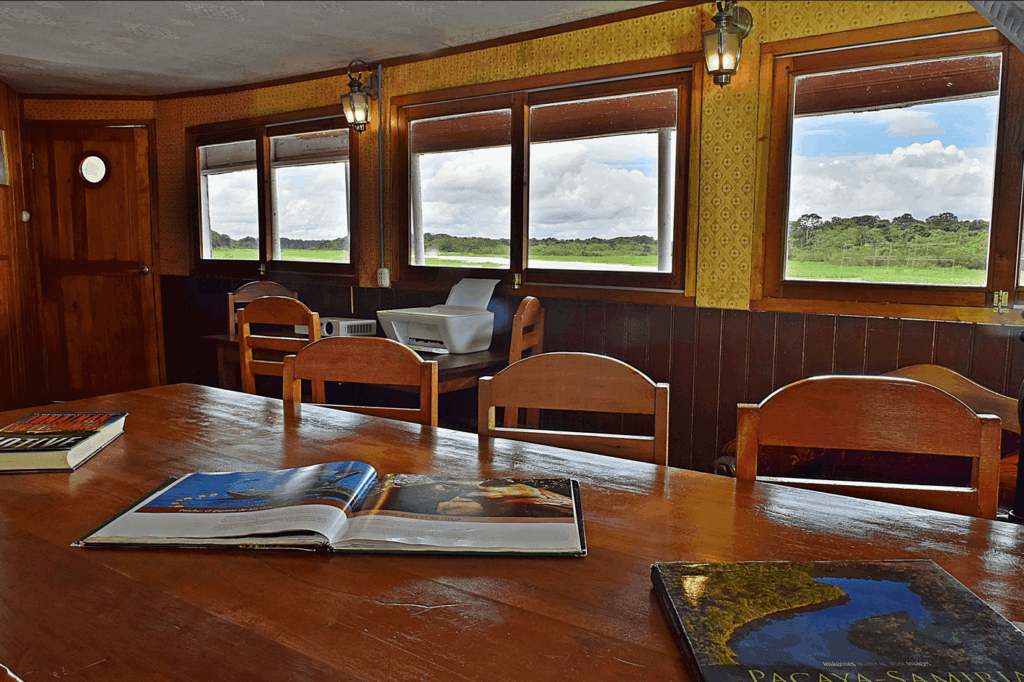
A Living Piece of Amazonian History
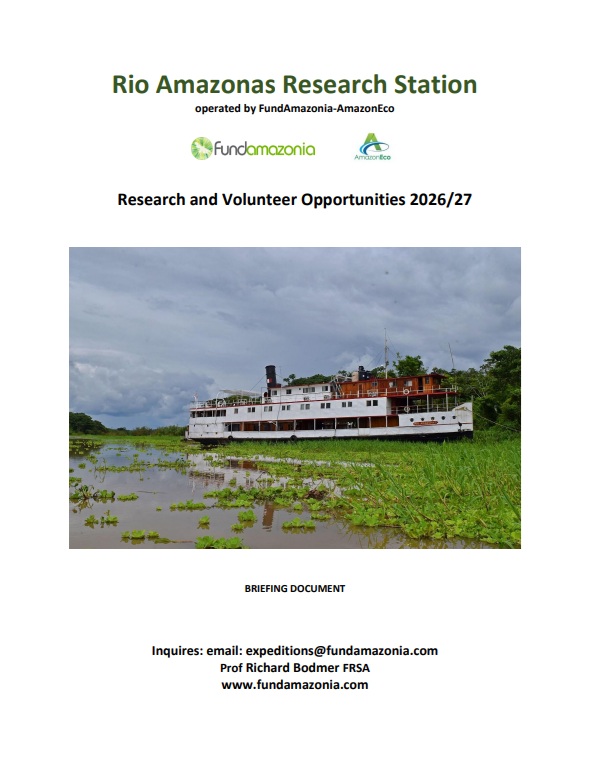
Live and learn aboard the historic Rio Amazonas - an eloquently restored Victorian steamboat turned floating laboratory.
Real Research. Real Impact.
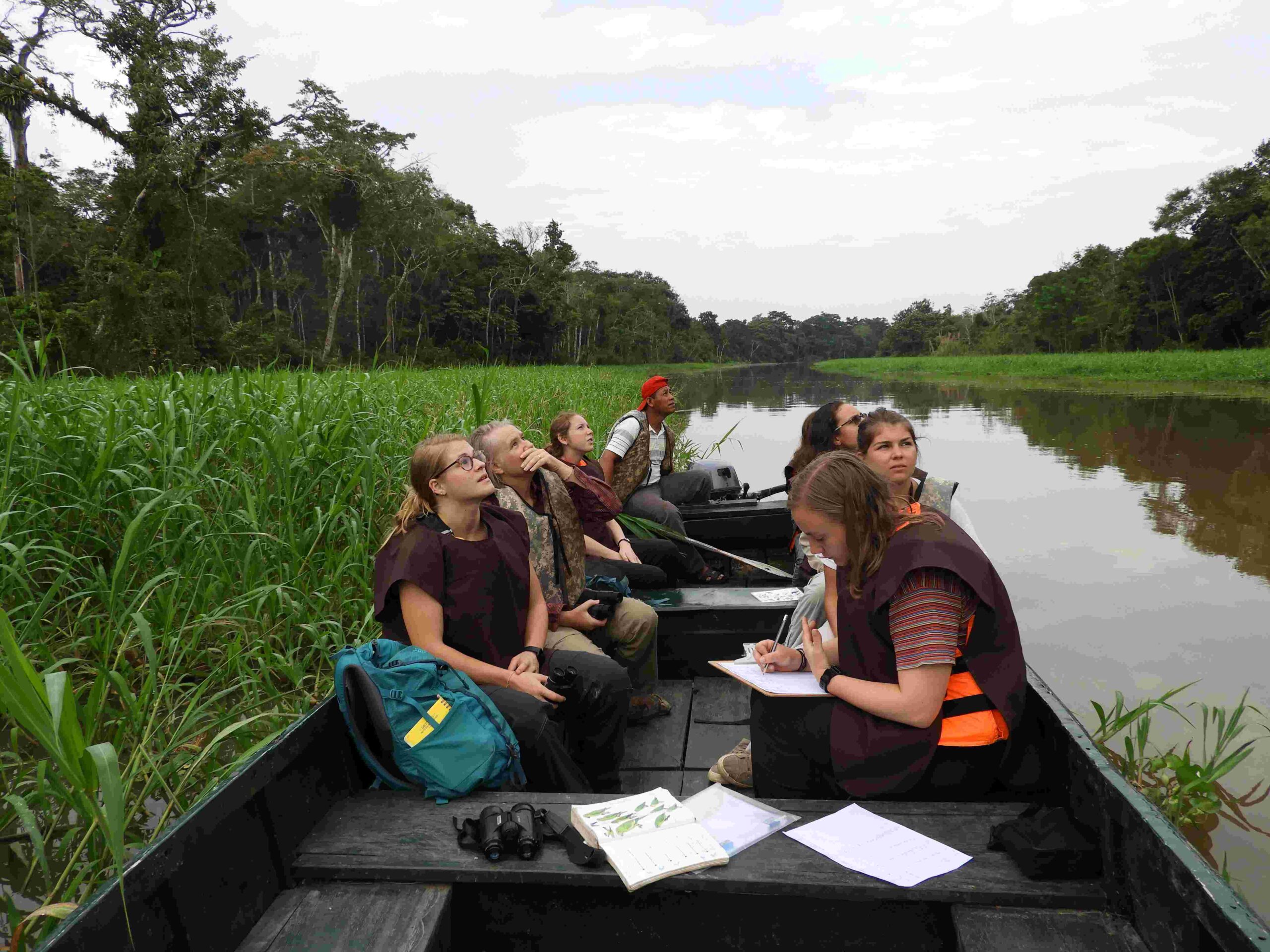
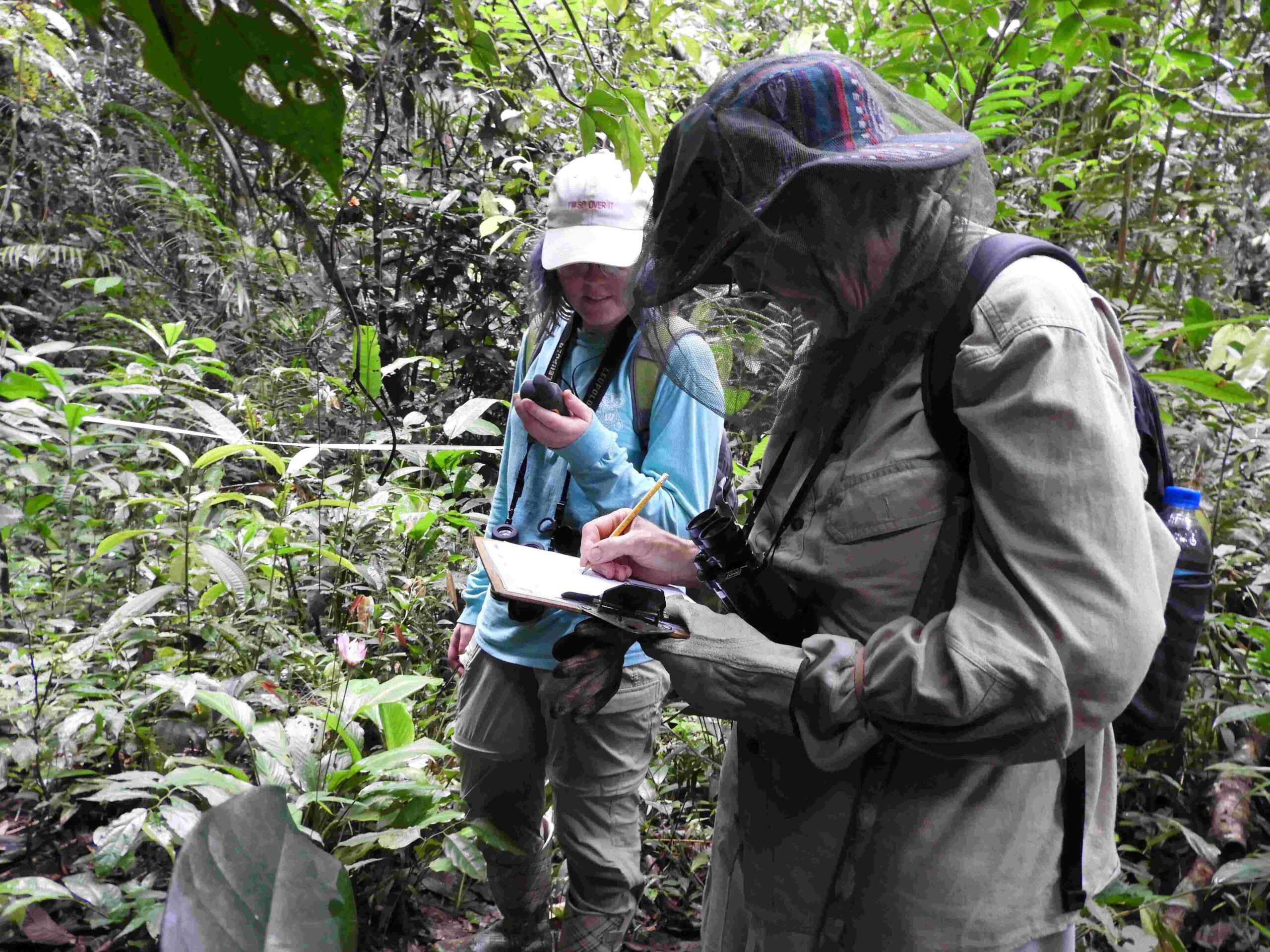
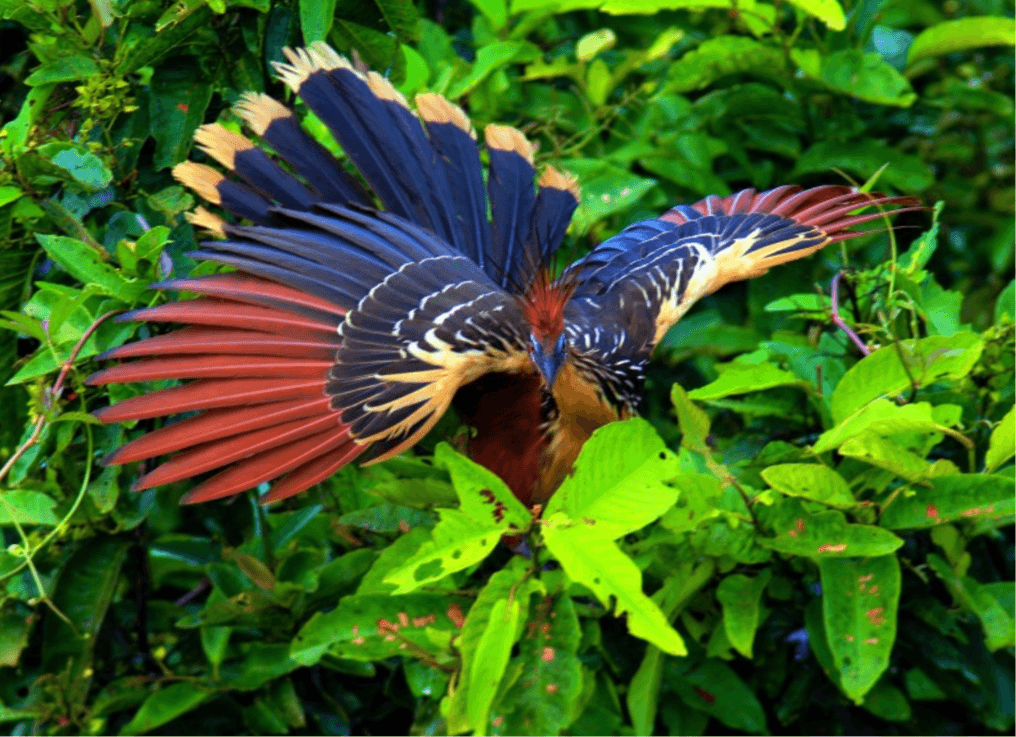
Help us survey forest mammals, census river dolphins, catch and measure fish, and track nocturnal wildlife alongside our expert biologists. You will help study frogs, bats, and caimans at night; and birds, fish, lizards, dolphins, primates, and terrestrial mammals in the day.
A Unique 8-Day All-Inclusive Journey into Amazon Science
You experience a comprehensive science expedition with all the wildlife surveys and community visits accompanied by friendly and knowledgeable biologists, and airport transfers, meals, private en-suite cabins with solar AC, and 4-star service for just $2,400.
Students, teachers, repeat volunteers and others can apply for Fundamazonia scholarships to help reduce the fees by up to half the price.
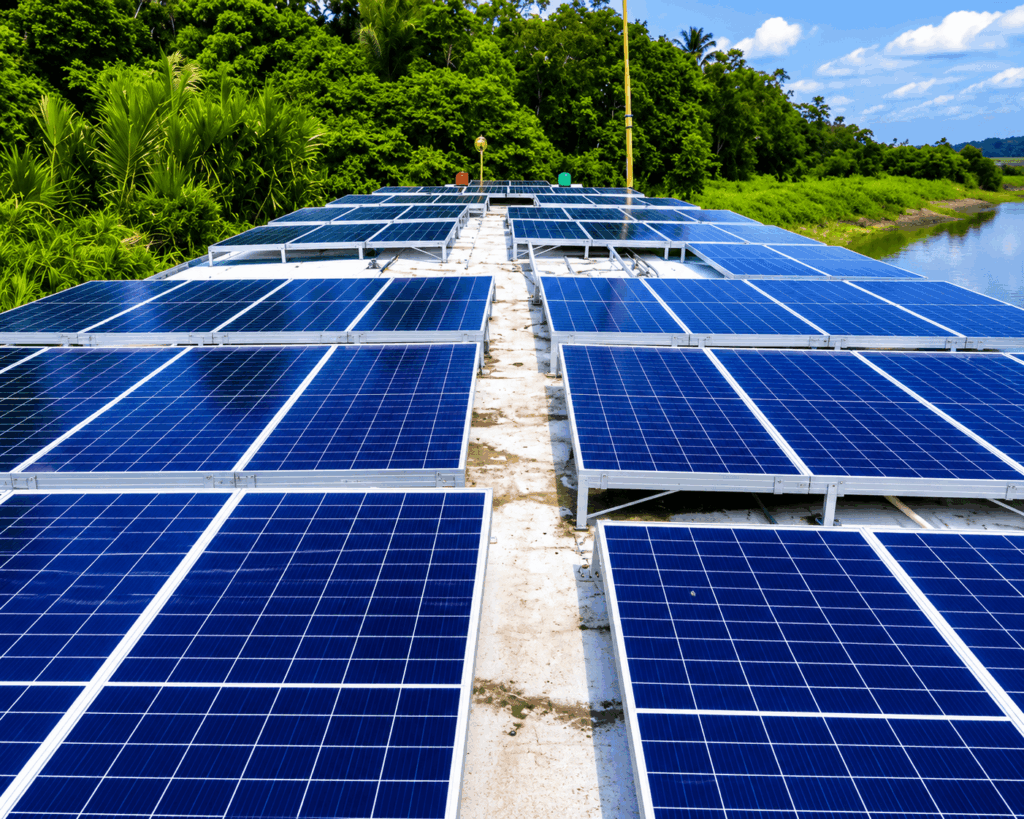
The Rio Amazonas Research Station prides itself on its eco-friendly operation and sustainable research methods. The station uses 100% off grid solar energy, solar hot water, ecological solid and water waste treatment, among other eco-friendly services.
We use a sustainable research strategy to study biodiversity by minimizing the use of intrusive methods and relying more on observations and indirect methods (camera traps, audio recorders, sonar, eDNA, hydrophones).
Over the years we have reduced the station's carbon footprint by 95%. Volunteers on average only use 12 kg of carbon directly during their stay and volunteers help conserve Amazon forests that indirectly offsets carbon from air travel.
We help support the economies of the local communities by hiring local field assistant, supporting health and education, by purchasing handicrafts, and supporting cultural activities.
The Research Station uses international health and safety protocols, including covid protocols, risk assessments and emergency response plans.
Download the 2026/27 Research Station Briefing that includes important information for the research expeditions including Health and Safety Information.
The Research Station is used by Operation Wallacea (UK), Earthwatch Institute (USA), DICE—University of Kent (UK), School for Field Studies (USA), Markham School (Peru), Operation Earth (China), Peru North (UK), among others. The Research Station has hosted international and Peruvian students from the Universities of Kent, Florida, Oxford, Cambridge, Cornell, Chicago, and Universidades de Autonimo de Barcelona, Nacional de Costa Rica, National de Colombia, Nacional de la Amazonia Peruana, among many others.