
Research at the station includes the Ecology of Vertebrates, Climate Change, Resource Use, Community Conservation, and Indigenous Studies.
We have been running research expeditions annually for 35 years, since our first student expedition in 1991.
We have long-term, multi-decade data sets on all the vertebrate assemblages, climate change, and resource use.

The overreaching goal of Fundamazonia’s research is to advance wildlife conservation in western Amazonia by studying the interrelation of the ecology of species, sustainable use, climate change and wildlife trade. The project uses field research that provides the science base for wildlife conservation, including community-based conservation in protected areas, community reserves, and Indigenous territories.
The monitoring conducted by Fundamazonia is unique because the research includes all the vertebrate groups, with data collected consistently in all seasons. The populations of some 220 arboreal, terrestrial, and aquatic vertebrate species are monitored monthly including fish, frogs, toads, caimans, lizards, forest birds, parrots, macaws, shorebirds, and aquatic, terrestrial, and arboreal mammals.
We also monitor forest habitats and sustainable resource use, management by local people, and socioeconomics.
Sample sizes are large. For example, sample sizes in a recent publication on dolphin and fish included a total of 1,341 dolphin surveys covering 6,705 km of transect and over 50,000 sightings of individuals from 2010 to 2024, and 1,290 fish surveys conducted over the same period at the same locations identified and measured over 40,000 fish.

The climate change research shows how recent historic droughts and floods are affecting the aquatic and terrestrial ecosystems. The climate intensifications have resulted in large mortality of species, and in Loreto millions of aquatic vertebrates died during recent droughts, and millions of terrestrial vertebrates died during the floods of last decade.
The peak of the intensifications is when species become particularly vulnerable, and these tipping points are changing the diversity in the Amazon. Our research shows how climate change is currently the greatest threat to Amazon biodiversity, because the 22-year data set on aquatic and terrestrial vertebrates covers the historic floods, historic droughts, and transition years.
The western Amazon forests can be broadly split into non-flooded forests (tierra firme) and flooded forests (várzea and igapó) that fluctuate annually between flooded and dry seasons. The ecology of wildlife in flooded forests revolves around the aquatic and terrestrial cycles and populations are sensitive to intensification during high floods and droughts.
Recent models predict an intensification of the hydrological cycles in the western Amazon basin with increased intensity and duration of flooding during wet seasons and lower water levels and less precipitation during the dry season.

Indigenous people of Amazonia have been using wildlife since pre-Colombian times and animals continue to be used throughout the Amazon basin. Over the past three decades research of Fundamazonia has focused on understanding how species respond to hunting and fishing and developing community-based management and conservation strategies for sustainable use and species recovery.
Fundamazonia’s research in the Amazon overwhelming found that community-based approaches to wildlife management and conservation were resulting in greater success than strict protection or other forms of management. Over three decades community-based wildlife management systems have been developed through research and community participation resulting in sustainable community-based conservation.
Community-based strategies were shown to be successful in the socio-economic and cultural landscape of the Amazon. This led to an expansion in the number of community managed areas in the form of Indigenous territories, community run protected areas and community co-managed protected areas. Currently around 60% of Loreto is a community/co-managed/Indigenous area where people are conserving the Amazon forests (Map).
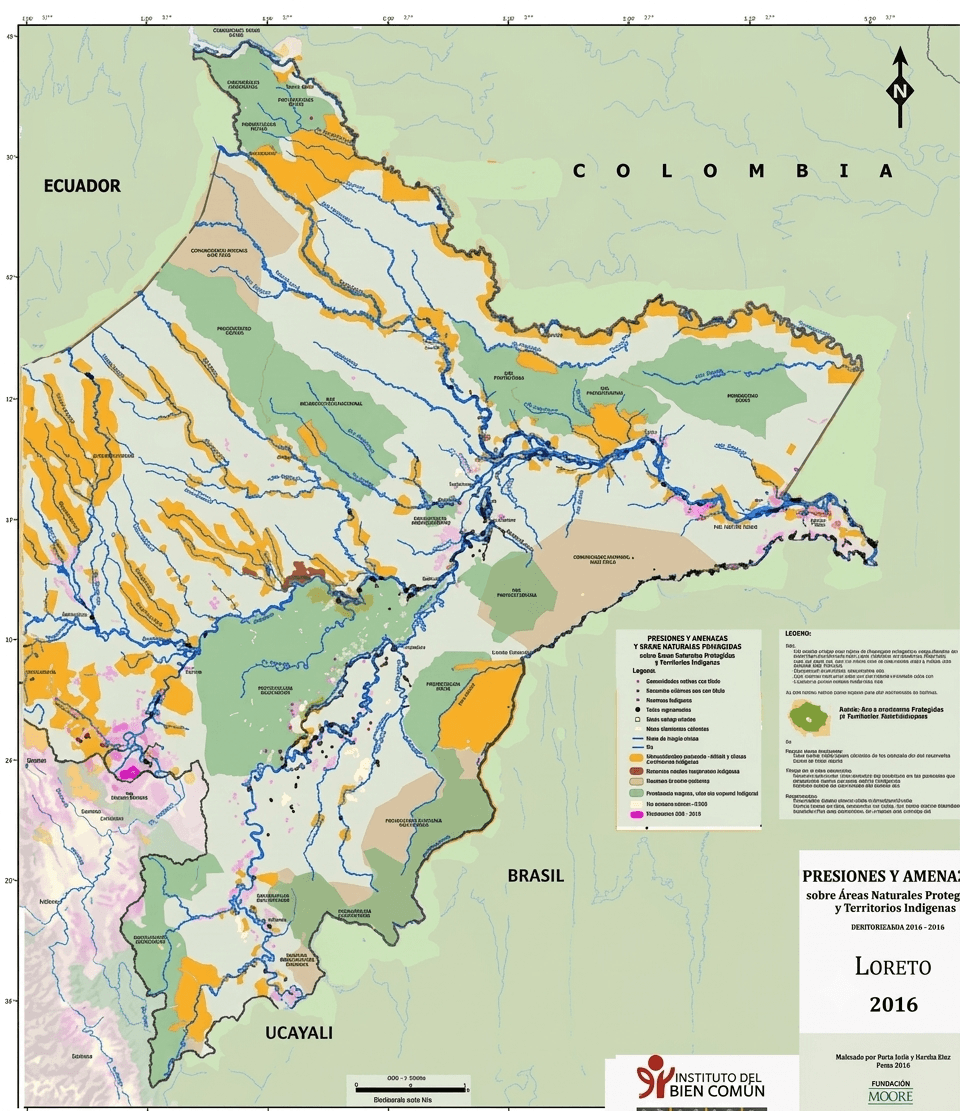
Map of Loreto showing community Regional Conservation Areas, Co-managed National Reserves (green), and Indigenous Territories (orange).
Some of the research on sustainable use programs involve regulated international wildlife trade, such as the peccary leather trade and river turtle trade involving CITES, custody chains, certification and verification.
Research is also done on local trade in wildmeat, fish and palms which are important resources, and many indigenous people depend on local trade for their household economy. Studies are being done on sustainability of resource use through Indigenous management, which has shown to be sustainable in community reserves, co-managed reserves, and indigenous territories.
Iquitos has one of the largest and most active wet wild meat markets in the western Amazon and long-term research is being done on the wild meat trade. This research is particularly important after the pandemic, because of the links between wild meat markets and disease transmission.

Research projects include ecology, population dynamics, reproduction, hunting, sustainable use and management, primarily using camera trap methods.
Research projects include ecology, population dynamics, illegal trade, primarily using camera trap methods.
Research projects include ecology, population dynamics, behaviour, hunting impacts, and conservation.
Research projects include ecology, population dynamics, behaviour, communication and conservation.
Research projects include population dynamics and habitat use.
Research projects include ecology, population dynamics, and conservation.
Research projects include ecology, population dynamics, and conservation.
Research projects include diversity, ecology, population dynamics, sustainable use and traditional fisheries management.
Research projects include ecology, population dynamics, and conservation.
Research projects include diversity, ecology, and population dynamics.
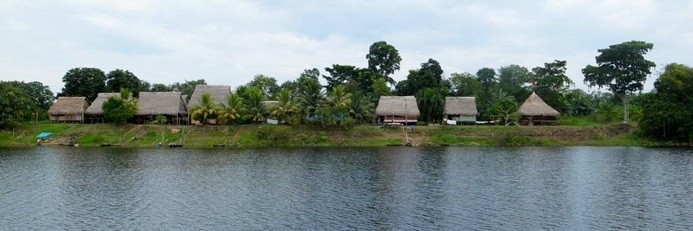
Dr Richard Bodmer
Fundamazonia, 332 Malecon Tarapacá, Iquitos, Loreto, Peru
AmazonEco, Jr Loreto 200, Iquitos, Loreto, Peru
Email: expeditions@fundamazonia.com
Tel: +51-65-231913
© 2026, All Rights Reserved by AMAZONECO E.I.R.L
Developer by Soto - Software Development ®